


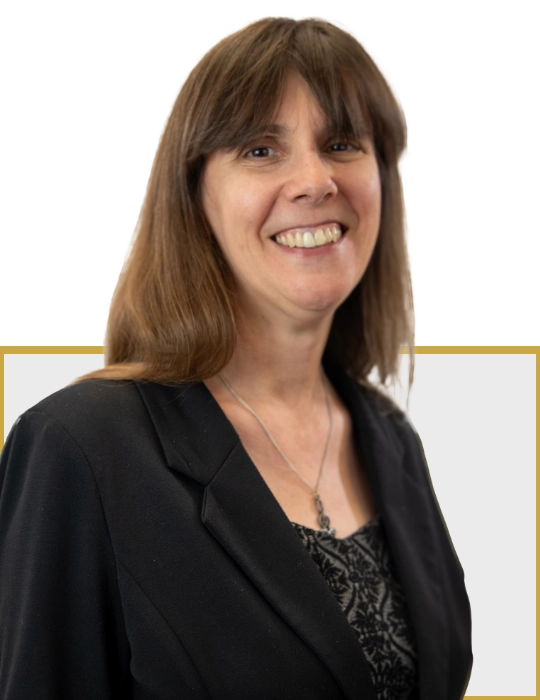
Mrs DayHead of RE
The Humanities faculty is made up of the Geography, History and RE departments.
RE is led by Cathy Day, who joined Wilnecote in 2006. Her specialism is in Christian beliefs and practices, with a particular focus on ethical issues. She is supported by Amy Ferris who has a specialist area of Holocaust Studies taught in year 9 and experience of delivering GCSE RE.
As a whole, the Humanities faculty has an excellent balance of experience and expertise, which enables it to be dynamic in its thinking. The individual departments meet separately to discuss subject specific issues and plan specialist schemes but there is also a strong Humanities ethos, with a shared vision which drives what we are trying to achieve and a genuine team atmosphere which means that ideas on teaching and learning are shared at a whole faculty level.
Vision for RE at The Wilnecote School
- Students should develop a love of thinking about life’s deeper questions of meaning and existence, as well as learning about religious practices within society. They should also begin to enjoy the art of debate and the skill of evaluation of key statements and concepts.
- Students should be introduced to case studies taken from contemporary life as well as from history, and encouraged to analyse and use them as examples in arguments and explanations.
- Students should have a sense of the variety of religious life across the world, and the variety and shades of opinion within religions themselves.
- Students should be able to analyse topics in depth and compare themes over time.
- Students should understand how religious concepts link to issues that arise in contemporary society – e.g. consequences of dehumanisation, arguments about armed conflict and Just War, democratic rights of equality and lack of discrimination, the imperative to protect the environment, valid forms of resistance to oppression. These links can be found across all three of our humanities subjects.
- Students should practise and build key RE skills – explanation, evaluation, exemplification – building and revisiting at KS3 the core skills for the study of RE at GCSE and beyond.
Our RE curriculum takes into account both the 2015 Coalition government’s subject content reforms of the GCSE curriculum, and a variety of more recent reports from among others The RE Council and Ofsted about the state of RE in the UK. We are fortunate that our Academy Trust values RE’s place in the curriculum, and at Key Stage 3 we have curriculum time parity with our partner Humanities subjects, Geography and History. The desired 5% of curriculum time for RE was nationally only met by 44% of academies, with 34% of academies having no timetabled RE at key stage three according to a 2017 report. The 2021 Ofsted report on RE stressed that RE required sufficient dedicated curriculum time to deliver an ambitious curriculum and at Wilnecote this is given to all key stage 3 pupils. The commitment to RE shown by our Academy Trust does help mitigate the exclusion of RE from the EBacc schools’ performance measure, enabling RE to recruit at healthy numbers for key stage 4 full-course GCSE. Further to our core aims listed above in the intent, we also considered the following in designing our curriculum:
- We aim to balance providing sufficient in-depth subject-specific knowledge to allow focus on the more complex ideas about religion, with the need to avoid covering excessive amounts of material in a superficial way. Our key stage three curriculum avoids the approach criticised in the 2021 Ofsted review, of attempting discrete one-religion “topics” e.g. a term on Judaism. We structure our units of work around “Big Questions” e.g. Is it ever right to go to war, or Why might someone decide to become a Buddhist, and are selective about the substantive content we include. We present knowledge in a sequenced way so that it can deepen our pupils’ knowledge of both wider religious concepts (e.g. why might some key events in life receive religious recognition) and specific faith based rituals (e.g. why is water used in Christian baptism).
- The 2015 government requirements for RE were for an in-depth study of two religions at GCSE and the inclusion of religious sources of religion (e.g. sacred texts and leaders). We selected Islam as our second religion for several reasons (subject specialism and experience of staff, a desire to tackle some perceived misconceptions about Islam reported by students at key stage three, and an opportunity to build on some of the content learnt in several of our feeder schools at key stage 2 – e.g. the 5 Pillars of Islam). Because of this selection for key stage 4, we were aware of the danger of loading our curriculum too heavily with Abrahamic religious practice at the expense of dharmic. For this reason, we have a year 8 unit which includes a Buddhist focus, as well as Hindu practices and beliefs covered in both year 8 and 9 units.
- We value the explicit modelling to our pupils of building scholarship, and so our curriculum allows opportunities for our teachers to explain to pupils the professional development they themselves have undertaken, specifically on the topic of the Holocaust / Shoah. In the past we have tried to share with our students new insights we have obtained from our own reading and courses attended. We have run trips to the UK Holocaust centre, and year nine has been visited by a speaker organised by the centre with the stated aim of encouraging our students to learn more about this topic. We have devoted a whole term of the year 9 curriculum to this subject which we believe is of importance not just to issues around general religious topics (justice, prejudice, sanctity of life, dehumanisation) but also allows us to link with some of our History curriculum and contemporary topics on the PSHE syllabus. We sequence year nine carefully, making sure the concept of evil has been examined before the Holocaust unit, and the Rwandan genocide has been studied as an example of dehumanisation (of the Tutsi minority via Interahamwe racist propaganda). This means that when the Holocaust is taught, students feel more confident with some of the key concepts and are able to deepen their understanding of one of the pivotal events of recent European history and examine it maturely and appropriately.
- Because we aim to provide students with substantive knowledge of religious and non-religious traditions, to examine how they might know about religious beliefs, and to allow students to develop a personal knowledge of their own values (all noted by Ofsted as characteristics of the best RE curricula) we use some of the GCSE AQA assessment framework albeit modified, in key stage 3 as well. This allows the knowledge questions (1 and 2 mark) to be mastered as building blocks to 4 mark questions and 6 mark questions which consider religion in practice as well as digging deeper into belief. The 12 mark evaluation question links to our “Big Question” key stage 3 approach, and allows us to build GCSE skills with, in many, cases different yet relevant material. The structure of this 12 mark question also allows us to challenge misconceptions that can occur in a superficial study of religions that e.g. all Catholic Christians believe contraception is evil or all Christians believe God made the world in 6 days.
- Our school focus on “ninja vocabulary” allows us to be explicit about different types of knowledge e.g. more general religious concepts that could be seen in other curriculum areas (e.g. forgiveness, miracle) and knowledge specific to a particular religion (e.g. incarnation (Christianity), dukkha (Buddhism)).
Road Maps
Education Act 1996 and the School Standards and Framework Act 1998: Withdrawal request.
Under the Education Act 1996 and the School Standards and Framework Act 1998, parents and carers have the legal right to withdraw their child from all or part of RE. This includes lessons and any RE-related events or activities. You do not need to provide a reason for your request.
If you wish to withdraw your child from RE, please follow these steps:
-
Contact the school in writing, either by email or letter, to formally request the withdrawal.
-
Address the communication to Mrs Marsland, Deputy Head Teacher for Quality of Education, The Headteacher or the school office.
-
Indicate whether you wish to withdraw your child from all RE or specific parts only.