DofE 12Hour 24
11/02/2024
As the students arrived back to school for 8pm, there was a real sense of anticipation in the air. Although…



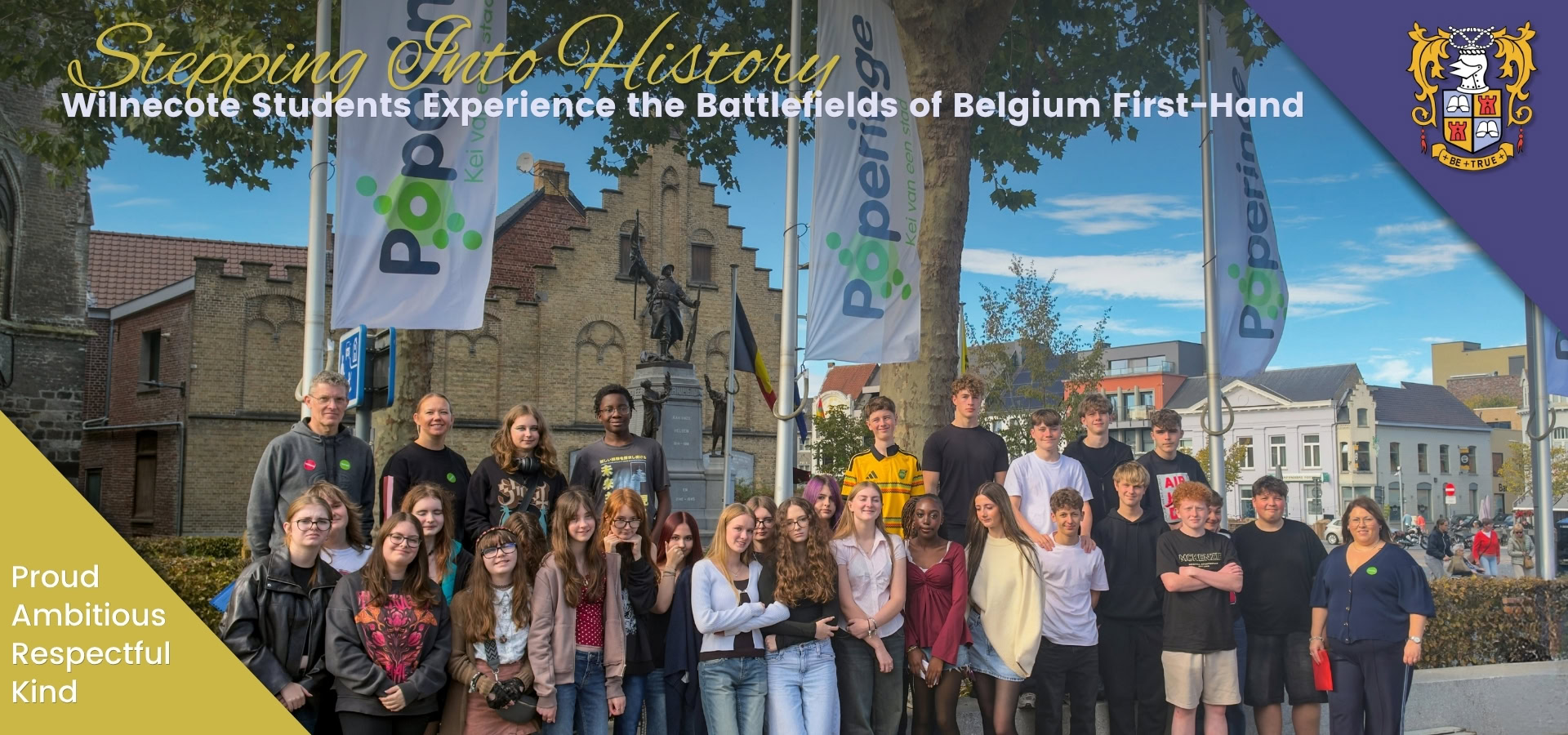
Students from The Wilnecote School recently returned from an unforgettable three-day history residential trip to Belgium. Travelling across the Ypres Salient, pupils explored preserved First World War trenches, traced the wartime medical evacuation route for their GCSE studies, paid their respects at the Menin Gate, and earned glowing praise from museum staff.
It is one thing to read about the First World War in a classroom textbook, but it is quite another to stand inside an original century-old trench at dawn. Despite an eye-watering 3:00 am start at school and an early morning ferry crossing, our students hit the ground running for a packed three-day journey through the historic battlefields of Flanders.
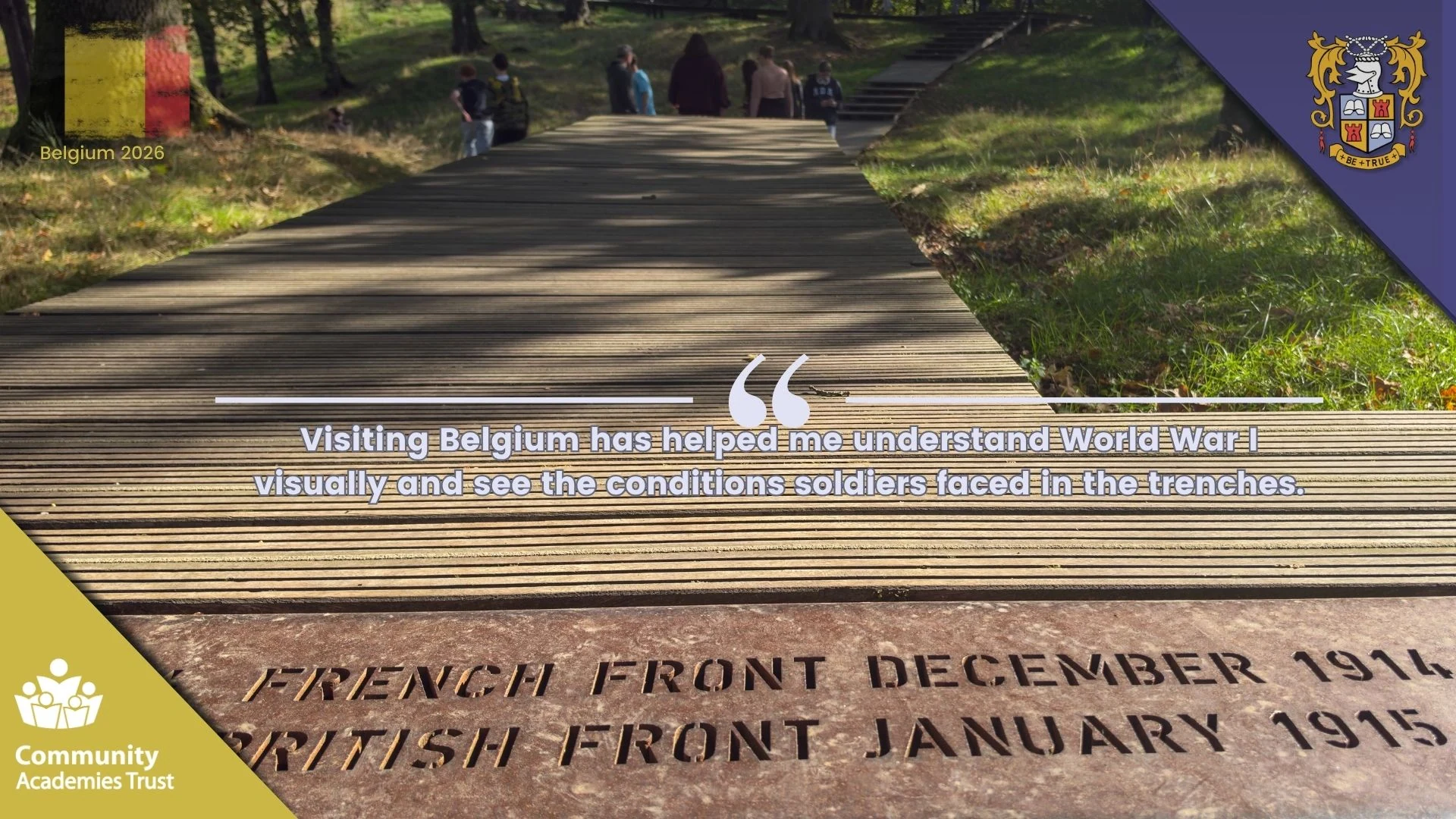
The first morning took the group straight to Hill 60, a preserved battlefield scarred by fierce underground warfare. Students walked amongst deep mine craters and original German concrete bunkers while learning about the tunnelling companies who worked beneath the earth. From there, they visited the Memorial Museum Passchendaele 1917 in Zonnebeke, descending into reconstructed dugout tunnels and full-scale British and German trench networks. Staff at the museum were so impressed by the group’s conduct and thoughtful questions that they went out of their way to compliment our students on how polite, respectful, and engaged they were. After visiting the Menin Gate in Ypres, where several students searched the 54,000 inscribed names to find their own relatives, the group checked into their hotel. The evening brought plenty of laughter as staff witnessed some very creative approaches to putting duvet covers on, followed by a well-earned dinner and time to relax with friends.
Mrs Leary, Trip Organiser, shared how proud she was of the group from the very beginning of the tour. “Even with a 3:00 am departure, the students’ enthusiasm and maturity never wavered,” Mrs Leary said. “Hearing the staff at the Passchendaele Museum specifically praise our young people for their manners and genuine interest was a wonderful moment. Whether they were helping each other tackle some rather questionable bed-making techniques at the hotel or standing quietly at the memorials, they were a joy to take away and looked after one another brilliantly.”
Day two brought the students’ GCSE History studies directly to life by tracing the First World War medical chain of evacuation from the front line backwards. Starting in former No Man’s Land at Buffs Road Cemetery, students saw where stretcher-bearers and Regimental Aid Posts operated under heavy fire. They then moved further back to Gwalia Farm Cemetery, the site of a Main Dressing Station where wounded soldiers received urgent triage, before finishing the morning at Lijssenthoek Military Cemetery. Situated beside the railway line out of reach of most German artillery, Lijssenthoek housed the largest evacuation hospital in the Ypres Salient and now holds 10,784 burials.
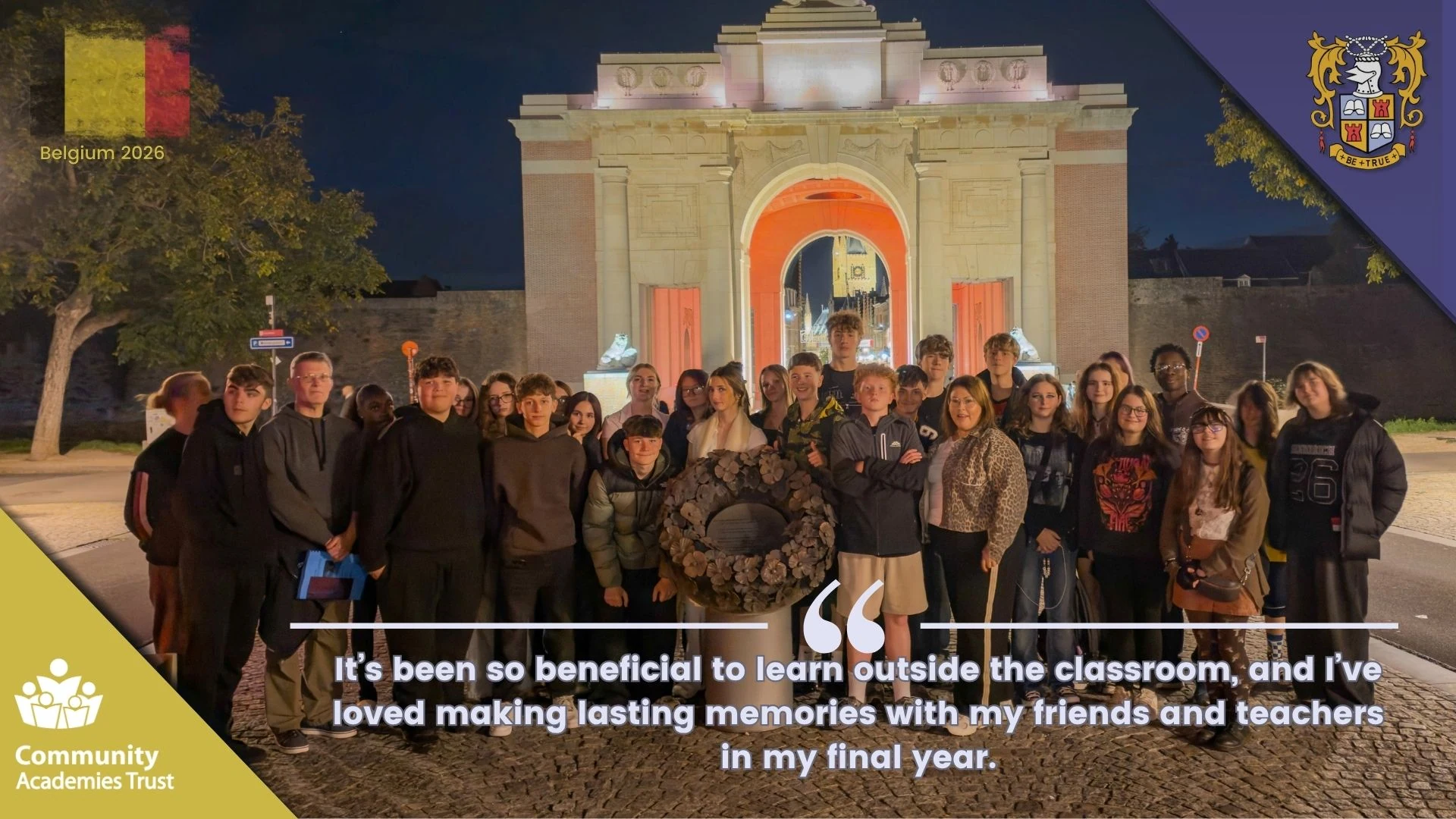
After lunch, the group explored the personal stories inside the In Flanders Fields Museum before taking a short drive to Poperinge to see the sobering cells and courtyard execution post where soldiers convicted of desertion were shot at dawn. A trip back into Ypres offered a lighter moment at a traditional Belgian chocolate shop, where our students received a very warm welcome and stocked up on treats, before returning to the Menin Gate after dinner to witness the moving Last Post ceremony in complete silence.
Mr Farrell, Head of Humanities, highlighted the lasting academic and personal value of seeing these sites in person. “Walking the exact route of the chain of evacuation from Buffs Road back to Lijssenthoek turns abstract exam topics into real human stories,” Mr Farrell explained. “Our students stood in the very places they have been learning about in lessons and will soon write about in their GCSE exams. Comparing the Commonwealth cemeteries with the German burial ground at Langemark on our final morning gave them a deep, rounded understanding of the scale of the conflict that will stay with them far beyond the classroom.”
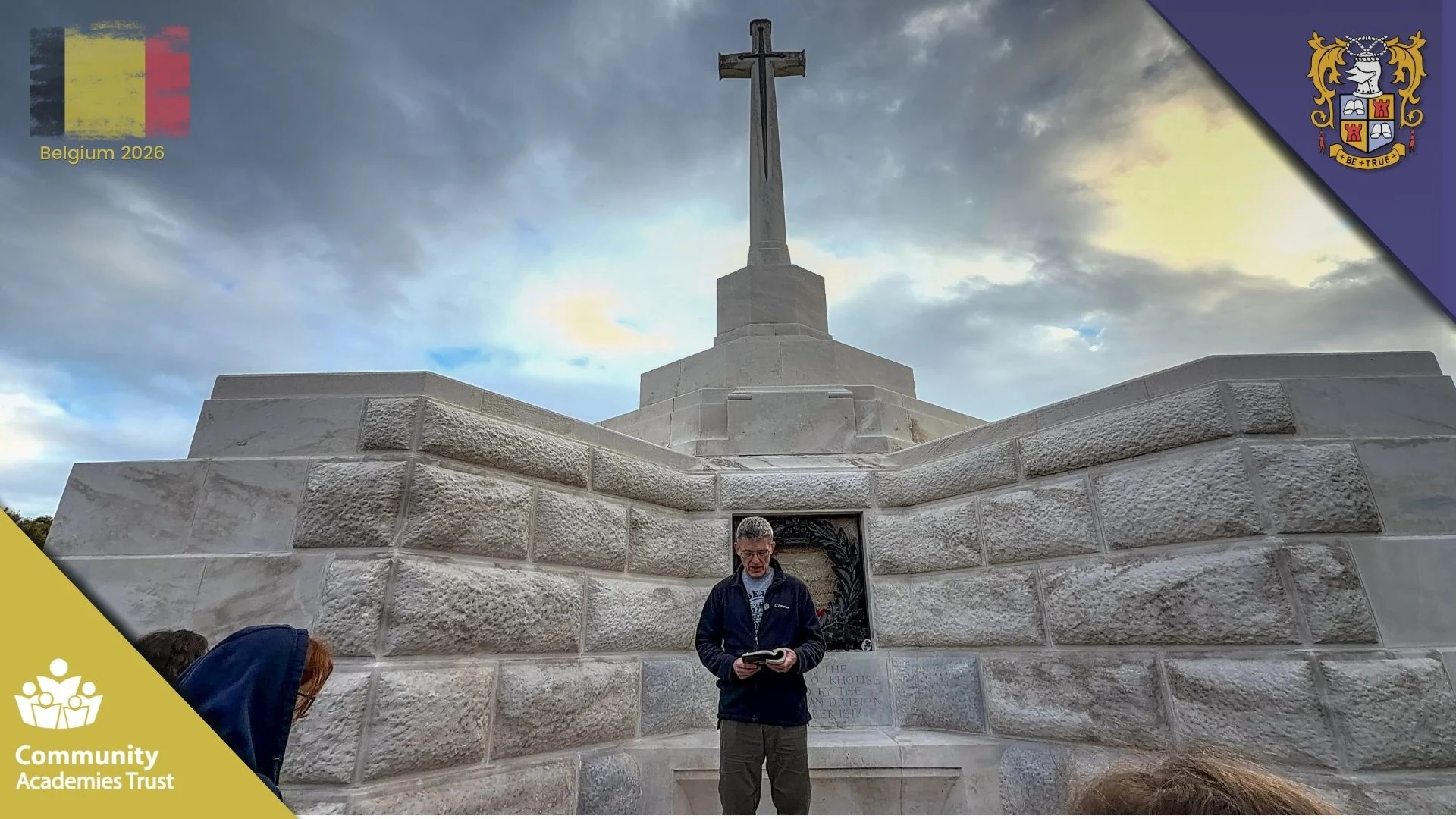
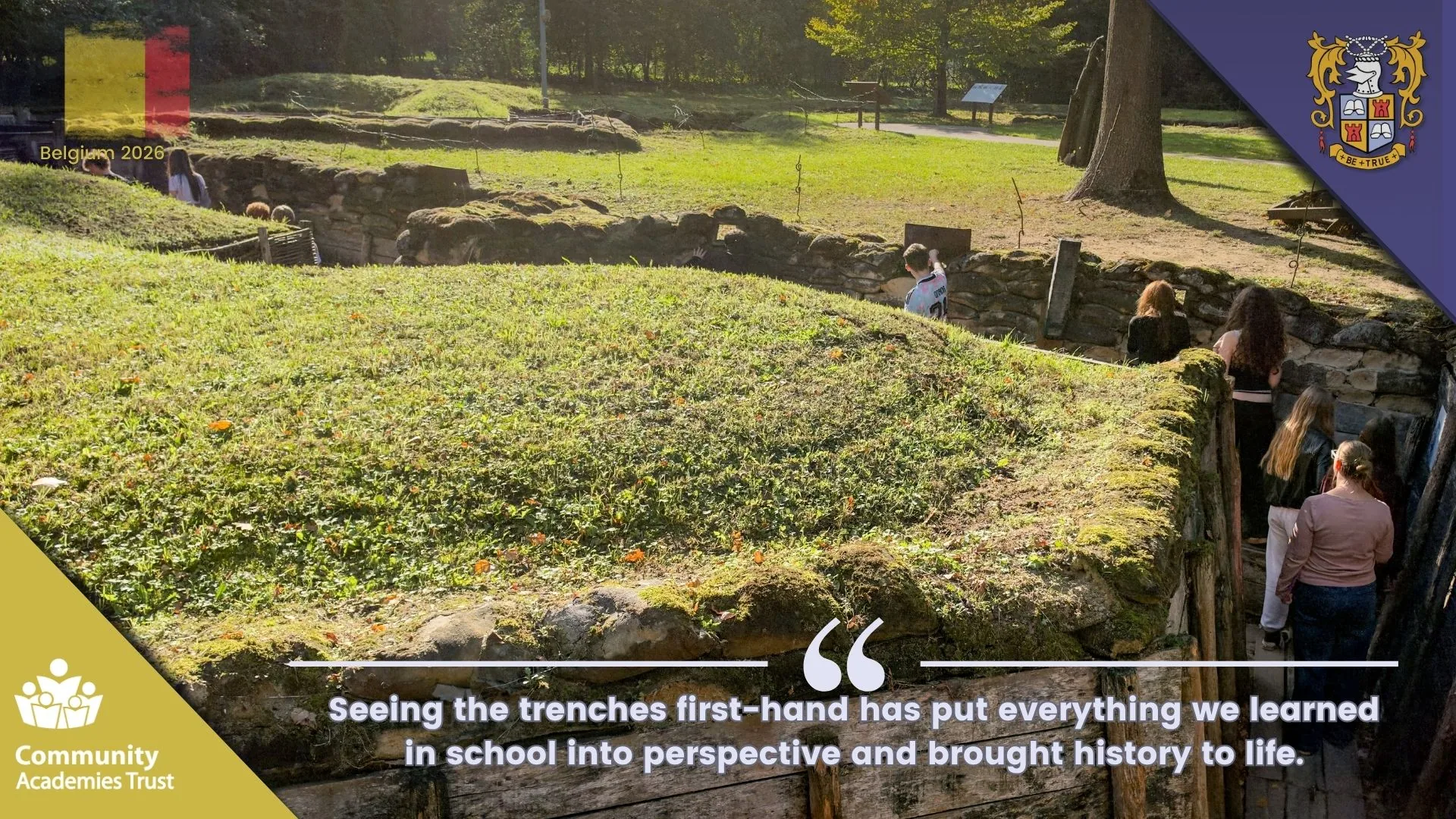
Even with the coach packed for the journey home on day three, there were three remarkable stops left to experience. Students first visited Langemark German Military Cemetery, noticing the striking contrast between the white Portland headstones of the British cemeteries and the dark, flat granite stones beneath the oak trees at Langemark, where a single mass grave holds nearly 25,000 German soldiers. Next came Tyne Cot Cemetery, the largest Commonwealth war cemetery in the world, before a final visit to Hill 62 at Sanctuary Wood. Once a quiet rest area behind the lines before German advances turned it into a fierce front line, Sanctuary Wood gave students the rare chance to walk through original, preserved First World War trenches before heading back to the ferry.
Mr Foskett, Head of The Wilnecote School, praised both the students and the staff who made the residential possible. “Trips like our Belgium tour are a cornerstone of life at The Wilnecote School, giving our students experiences and memories that last a lifetime,” Mr Foskett said. “Seeing our young people search for family members on the Menin Gate and witness the Last Post ceremony shows how deeply they connect with the history of those who went before us. I am immensely proud of how our students represented our school abroad, and grateful to Mrs Leary, Mr Farrell, Mrs Ferris and Mr Savageall the staff behind the scenes leading up to the trip for organising such a meaningful visit.”